
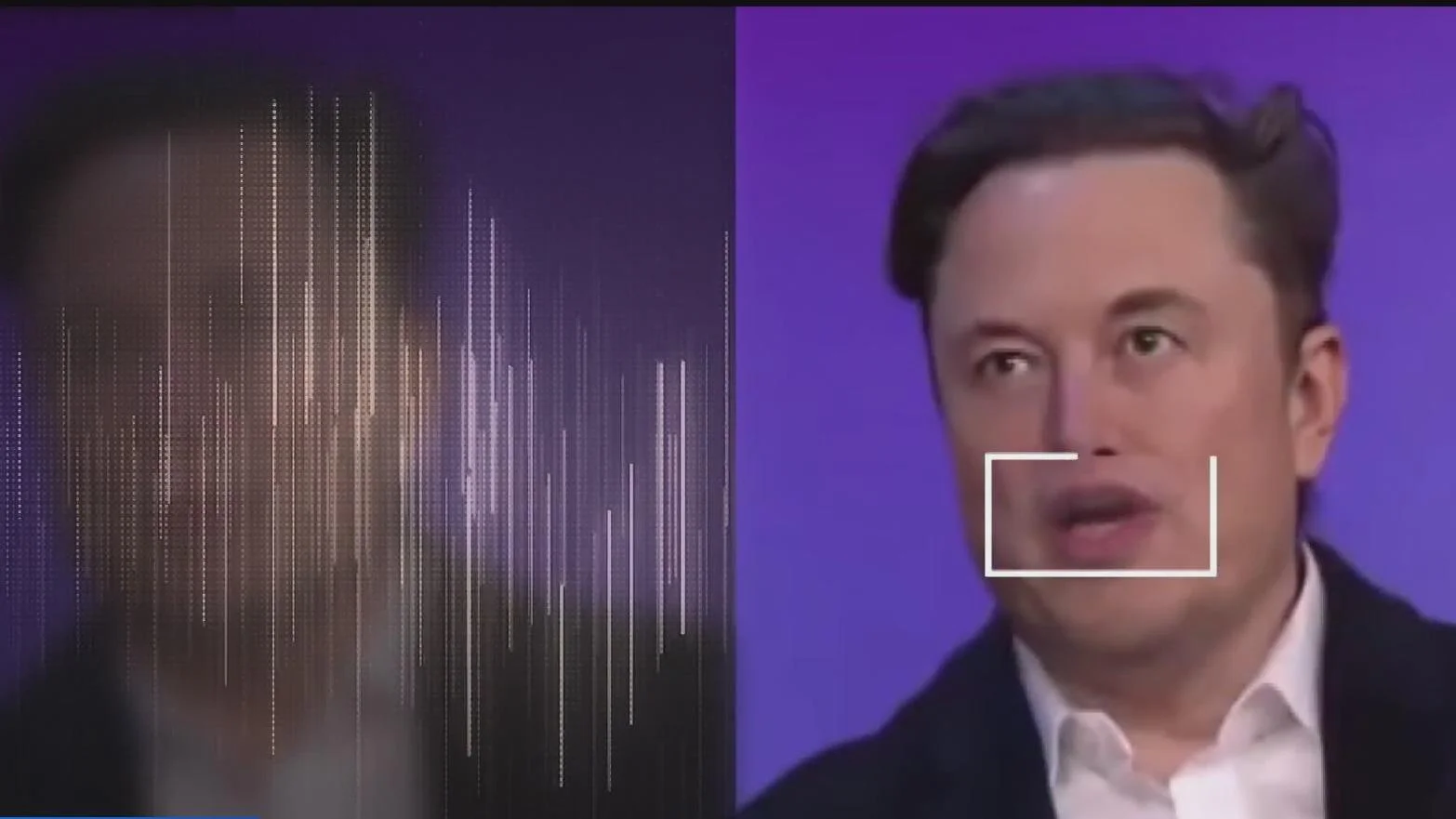
Australia’s securities regulator removed more than 19,400 online scams in the 2026 financial year as generative AI allowed criminals to build connected networks of deepfake videos, fabricated news reports, false reviews and cloned investment websites. The total was 182% higher than the previous year, according to ASIC’s 17 August warning.
The Australian Securities and Investments Commission said the growth of these networks means a basic internet search can no longer establish that an investment provider is genuine. Criminals are creating enough supporting material around invented brands that search results may appear to offer independent confirmation when the articles, testimonials, advertisements and websites all belong to the same fraud operation.
“AI is making investment scams more convincing and harder to detect. A simple online search is not enough,” ASIC Chair Sarah Court said.
Scammers Are Building Their Own Verification Trails
The warning describes a change from isolated fraudulent advertisements to coordinated webs of deception. A potential victim may first encounter a social media advertisement featuring a deepfake video of a politician, economist or financial commentator, then be directed to a counterfeit news article carrying the same endorsement.
Searching for the investment’s name may return favorable reviews, apparently independent articles and other websites repeating its claims. The volume of content creates false social proof, particularly when scammers invent distinctive product names or phrases that they can dominate in search results.
This is an extension of techniques ASIC identified in 2025, when the regulator found criminals using website templates, fabricated corporate documents, embedded market charts and fake news pages to make investment platforms appear established. ASIC subsequently expanded its disruption work from fraudulent websites to social media advertisements, a common starting point for the schemes.
Generative AI lowers the cost of producing every part of that trail. It can create articles, reviews, logos, spokesperson images and localized advertising copy at scale. Deepfake tools can then place recognizable faces and voices into videos that appear to confirm the same claims.
The result is a verification problem rather than simply a content-quality problem. Several search results may appear to agree, but agreement has little value when the pages are controlled by the same operator. Similar manufactured trust signals also appear in crypto scams originating on social media and in fake cryptocurrency giveaways that use deepfakes and countdown timers.
Fake Profits Move the Scam Beyond the Screen
Once a victim submits contact details, the operation typically moves from automated content to direct contact. ASIC said scammers use scripted phone calls, counterfeit trading dashboards and small initial profit payments to build confidence before requesting larger deposits.
A fake platform may display rising account balances even though no investment has been made. In some cases, a victim may be allowed to withdraw a modest amount. That payment functions as an acquisition cost for the criminals, strengthening the victim’s belief that the platform is real before further funds are requested.
The misuse of familiar faces adds another layer of credibility. Scamwatch reports for FY26 associated A$7.4 million in losses with impersonations of prominent Australians. The most commonly impersonated figures included Prime Minister Anthony Albanese, market commentators Tom Piotrowski and Alan Kohler, economist Stephen Koukoulas, politicians Jacqui Lambie and Angus Taylor, entrepreneur Dick Smith, mining executive Gina Rinehart, economist Alan Oster, politician Pauline Hanson and broadcaster John Laws.
The list is likely to change with the news cycle. ASIC said criminals select public figures who are receiving attention at a particular moment, allowing scam campaigns to borrow relevance from genuine political, economic or market events.
A related ASIC warning in July covered deepfake-backed pump-and-dump schemes in which victims were sent from social media posts into WhatsApp or Telegram groups. Those schemes can be especially difficult to identify because victims may buy genuine listed shares through legitimate brokerage accounts, even though the recommendation and coordinated price promotion are fraudulent.
Takedowns Rose Faster Than the Number of Sites Removed
ASIC’s total of more than 19,400 removals in FY26 compares with 6,915 during FY25. Phishing-link takedowns rose 279% to 5,476, while the removal of fake investment platforms increased 151% to 7,051. Cryptocurrency-investment scam takedowns rose by almost 30% to 3,106.
Since establishing the takedown capability in July 2023, ASIC has removed more than 33,400 scam websites, advertisements and phishing links. The acceleration indicates both an expansion of the regulator’s disruption program and the ability of criminals to produce replacement sites and campaigns quickly.
A takedown does not necessarily identify the people behind a scam or recover money already transferred. It also does not mean that 19,400 separate criminal organizations were operating. One network can use numerous domains, advertisements and landing pages, replacing them as individual components are blocked.
The scale problem extends beyond retail investing. A separate US$25 million deepfake video-call fraud demonstrated how synthetic faces and voices can defeat visual identity checks inside companies. In both corporate and consumer cases, the weakness is the same: familiar appearance is being mistaken for independently verified identity.
An AFSL Number Alone Does Not Prove Legitimacy
ASIC recommends checking whether an investment provider holds an Australian Financial Services Licence, but the regulator cautioned that finding a licence number on a website is not sufficient. Scammers may copy a real licensee’s details, claim that an Australian Company Number is a licence, or impersonate a regulated business while using different contact information and website addresses.
Consumers should search ASIC’s Professional Registers and compare the legal name, licence number, authorized activities and contact details with the business making the offer. Any phone call or email used for verification should come from the official register or another independently located source, not from the advertisement, salesperson or website under review.
The Moneysmart Investor Alert List provides another check for suspected scam companies. Absence from the list does not establish legitimacy, however, because new scam brands and domains can appear before regulators receive reports or complete an assessment.
Pressure to act immediately, guaranteed returns, unsolicited contact and requests to move a discussion to a private messaging service remain warning signs. Consumers who have transferred money or disclosed information can contact their bank and use the government’s ReportCyber and Scamwatch reporting service.
Search Is Still Useful, but It Is No Longer Independent Proof
ASIC’s warning does not mean search engines have no role in checking an investment. Searches can still reveal regulatory alerts, domain inconsistencies, complaints and copied language. The problem is treating the number or polish of search results as evidence that a provider exists, is licensed or has produced the returns it advertises.
The safer test is whether information can be confirmed through sources the promoter does not control. That includes the regulator’s licence register, contact details published by the genuine licensed entity, established exchange records where relevant, and direct confirmation from a financial institution through an independently obtained channel.
AI has made fabricated content cheaper and faster to produce, but the central mechanism remains social engineering. The scam succeeds when repeated claims are mistaken for separate confirmation. ASIC’s FY26 takedown figures show how quickly that manufactured consensus is spreading, and why verification now has to move beyond the first page of search results.